How to Choose the Right Masonry Drill Bit for Concrete, Brick and Stone
October. 09, 2026
Choosing the right masonry drill bit starts with the material you need to drill. Concrete, brick, stone, tile and block may look similar from a distance, but they behave very differently under drilling pressure. A bit that works well in common brick may wear quickly in hard concrete, and a bit that is aggressive in concrete may chip tile if the operator starts too fast.
For importers, distributors and tool brands, the goal is not only to select one good product. The goal is to build a range that customers can understand quickly: DIY bits for light work, professional bits for repeated use, and SDS bits for rotary hammer drilling.
Start with the Base Material
| Material | Recommended bit type | Buying note |
|---|---|---|
| Concrete | Carbide-tipped masonry bit or SDS masonry bit | Use stronger tips and better flute design for repeated drilling. |
| Brick and block | Standard masonry drill bit | Good for light construction, anchors and household installation. |
| Natural stone | Premium carbide masonry bit | Hardness varies, so low-grade tips may wear quickly. |
| Tile surface | Tile bit first, then masonry bit if needed | Start slowly to reduce cracking and surface damage. |
Tip Material and Head Design
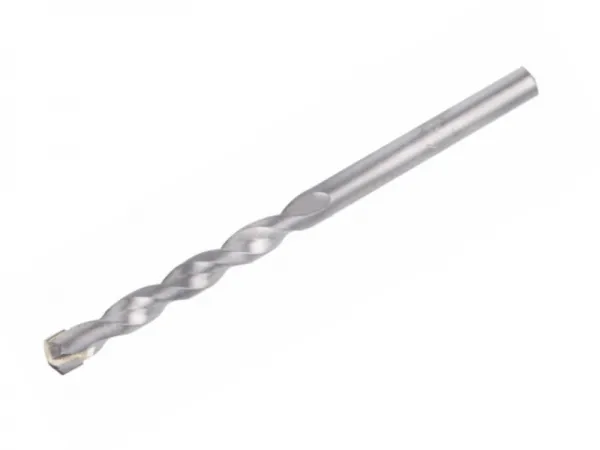
Most masonry drill bits use carbide tips because carbide can resist abrasion from concrete and mineral materials. For basic retail lines, a single carbide plate is common. For professional ranges, cross tips, multi-cutter heads or reinforced carbide designs can improve centering and service life.
A sharper and more stable tip also helps the user start the hole more accurately. This matters for anchor holes, bathroom installation, electrical work and any application where hole position is important.
Choose the Right Shank Type
Straight shank masonry bits fit standard drill chucks and are suitable for light-duty work. SDS Plus bits are used with rotary hammers for faster drilling in concrete and masonry. SDS Max bits are for heavier tools, larger holes and more demanding jobsite applications.
Flute Design and Dust Removal
Flute design affects how quickly drilling dust leaves the hole. If dust stays in the hole, the bit heats up, drilling slows down and the user may apply too much pressure. A well-formed spiral flute improves dust removal and helps the bit run cooler.
Sizes and Packaging for Wholesale
Common diameters such as 4 mm, 5 mm, 6 mm, 8 mm, 10 mm and 12 mm are useful for retail sets. Longer sizes are important for deeper anchor holes and construction work. For tool brands, a balanced program can include single bits, blister packs, plastic cases and contractor-focused bulk packs.
Common Selection Mistakes
Choosing a straight shank bit for heavy rotary hammer work.
Using a low-grade bit for hard concrete and expecting long life.
Ignoring working length when customers need deeper holes.
Selling mixed sets without clear material and tool compatibility on the label.
PTATOOLS supplies masonry drill bits and related drilling accessories for wholesale, OEM and private-label customers.
Conclusion
The right masonry drill bit should match the material, the power tool and the working depth. A clear product range helps users drill cleaner holes and helps brands reduce selection problems after purchase.