Polishing Pad Guide: Foam and Wool Pads for Paint Correction
November. 16, 2026
A polishing pad does more than hold compound against the paint. Its working surface helps determine how quickly defects are corrected and what finish is left behind. A wool cutting pad can help remove more pronounced defects, while a soft foam pad can refine faint haze and polishing marks. Between those stages, medium foam is often a useful starting point for light swirl marks.
The right combination depends on the paint, the defect, the polishing liquid, and the machine. Start with a small test spot and use the least aggressive combination that gives you the result you want.
Foam and Wool Pads at a Glance
| Stage | What you see on the paint | Pad and polishing liquid to consider |
|---|---|---|
| Cutting | More pronounced swirls, oxidation, or heavier surface defects on sound paint | A wool cutting pad or firm foam cutting pad with a compatible compound |
| Polishing | Light swirls, fine scratches, or mild haze left by compounding | A medium foam polishing pad with a finishing or medium-cut polish, depending on the defect |
| Final finishing | Faint polishing marks or haze visible under direct light | A soft foam finishing pad with a fine finishing polish |
Use these combinations as starting points. Check the pad maker's intended use and inspect the test spot under direct light before deciding whether the surface needs another stage.
Where Foam Polishing Pads Fit
Foam polishing pads, often called sponge pads, come in cutting, polishing, and finishing grades. A firm foam cutting pad paired with a suitable compound can handle more noticeable defects. Medium foam is a practical option for lighter swirls or a one-step polish when the test spot shows enough correction and a clear finish. Soft foam is used with a fine polish to refine faint haze or polishing marks.
Read the grade and intended application on the product specification when comparing pads. Pad colors are product identifiers, so check what each color means within the manufacturer's range. See the PTATOOLS polishing pad range for the grades and sizes available.
Where Wool Polishing Pads Fit
Wool pads are commonly used during compounding, especially when more pronounced defects call for a combination with greater cutting ability. Wool pads also come in different grades. The fiber construction and backing influence how the pad behaves, and some wool pads are designed to balance correction with a finer finish.
After compounding, wipe away the residue and check the area under direct light. If you can see fine haze or polishing marks, test a foam polishing pad with a finer polish on the same area. Let the result tell you whether a separate finishing pass is needed.
What One Test Spot Can Tell You
On a clean, cool panel, choose a small section that shows the defects you want to correct. For light wash swirls, try a medium foam pad and a compatible polish. Wipe away the residue and inspect the surface from more than one angle.
If the swirls are still visible, test a firmer foam pad or a compatible wool cutting pad with compound. If the swirls are gone and the surface looks slightly hazy, test a softer foam pad and a finer polish. Once you have a combination that works, check the pad regularly as you move across the panel. Clean it as directed or switch to a fresh one when residue builds up. Use a separate pad for each polishing liquid, and follow the pad maker's care instructions.
Check the Machine and Backing Plate
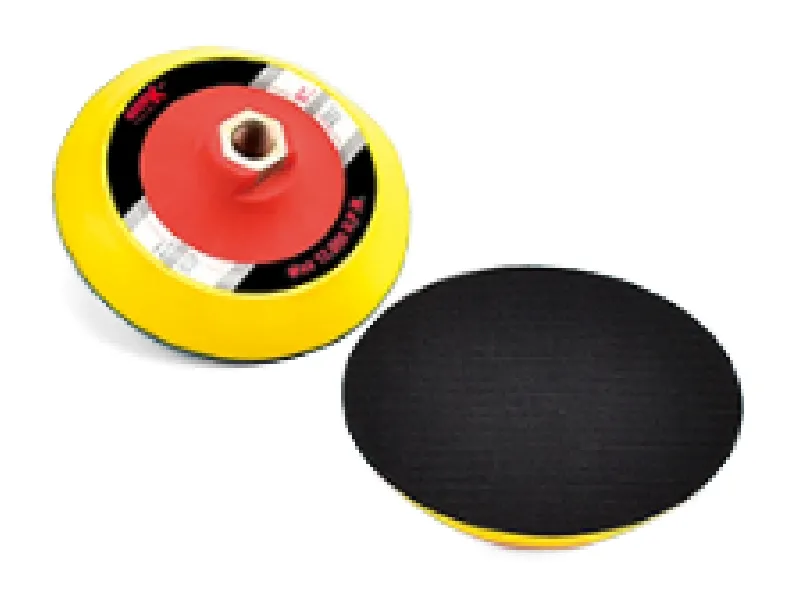
Before ordering, confirm whether the pad is specified for a rotary or dual-action (DA) polisher. Check the pad's working diameter, compatible backing plate diameter, and attachment style. The pad face and backing plate can have different diameters, so use the manufacturer's fit specification and center the pad on the plate before use. One example from our range: the PTATOOLS P34004 backing plate is 125mm (5 in) in diameter and 10mm thick, with a 5/16″–24 thread.
For a wholesale or OEM inquiry, include the polisher type, backing plate diameter, pad size, intended stage, and order quantity. Those details give our team a starting point for discussing options for your range.
Related Categories
Polishing pads and backing plates – pads for stone, metal and paint work, plus 5/16″–24 backing plates.
Sanding discs – abrasive discs for surface preparation before a polishing pass.
Flap discs – blending and stock removal on metal ahead of finishing.
Mounted points – small abrasive points for edges, welds and recessed areas.
Further Reading
Flap disc grit chart – how grit steps change the scratch pattern you start from.
Angle grinder disc types – matching the disc to the job before the finishing stage.